Spring is late, at least for the sakura. It’s already the end of March, well into the season, and we’ve been enduring our fellow hanami crowds that are equally hopeful, going as far west as Fukuoka with a diligent stop at Kyōto, to walking the waterfront streets along the Nakameguro River that’s supposed to be standing sentry on both sides by now with pale pink. But the blossoms have been elusive; the trees adamant with their closed buds.
Let us, then, have lunch. At an old favorite, a narrow corner building in the Nishiazabu district, its façade carved with that distinct crescent moon window. A parade of miniature porcelain pigs hiding behind the foliage up front keep us company while we wait in line. The sun is already baking in this spring morning, and I cave in too quickly and run to the nearest konbini to buy an umbrella. The restaurant finally opens, and past the butcher’s case we are ushered up the narrow stairs to the second floor. We’re served the usual plate of appetizers: the same cherry tomatoes simmered and grilled in some kind of crack pickle juice, and which I must admit I always look forward to just a little bit more than the tonkatsu. They’re still stingy and refuse (politely, apologetically) when I ask for okawari.
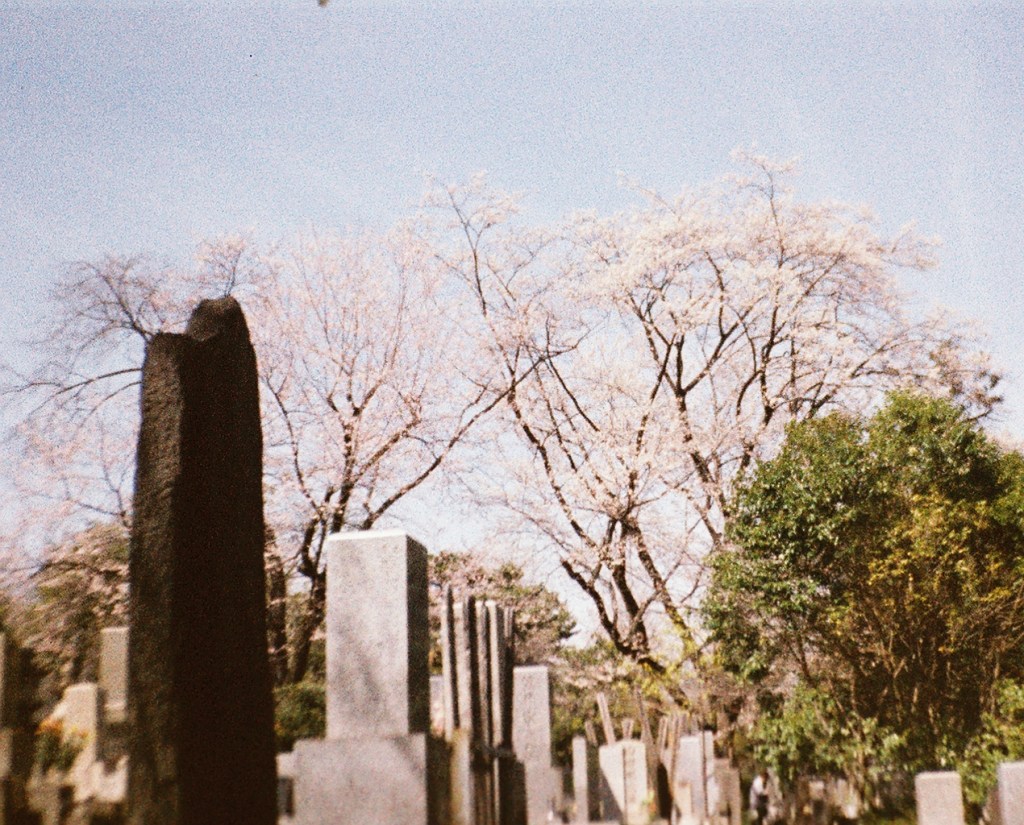
The neighborhood around here is full of residential streets, winding in and out of the main roads. Tucked in like pork belly in mille-feuille nabe are wayward cafés, patches of quiet parks, niche boutiques, and — perhaps most surprising of all — a cemetery. We don’t know where it came from. It’s an enormous stretch of green on the map and somehow it still managed to walk into our blind side. It’s solemn and tranquil the way cemeteries are, with a few visitors here and there visiting family graves, groundskeepers ambling along with their rakes. It’s a large place, abundantly treed and green but not overly manicured. The stone pillars characteristic of Japanese gravestones emit a crowded space, a chaos in order; none of the rolling lawns of modern cemeteries in the west with flat grave markers, nearly invisible in the ground. We only walk along the fenced perimeter, enjoying the respite from the sun with the shady eaves of trees. By one of the entrances we discover what appears to be a small gathering of tall sakura trees in full magnificent bloom, wearing a wig of innocent pink almost white in the blinding sun. This is how we encounter our first hanami. Without looking for it; in a cemetery, no less; with the city rolling indifferently along in that soporific, after-lunch quiet.
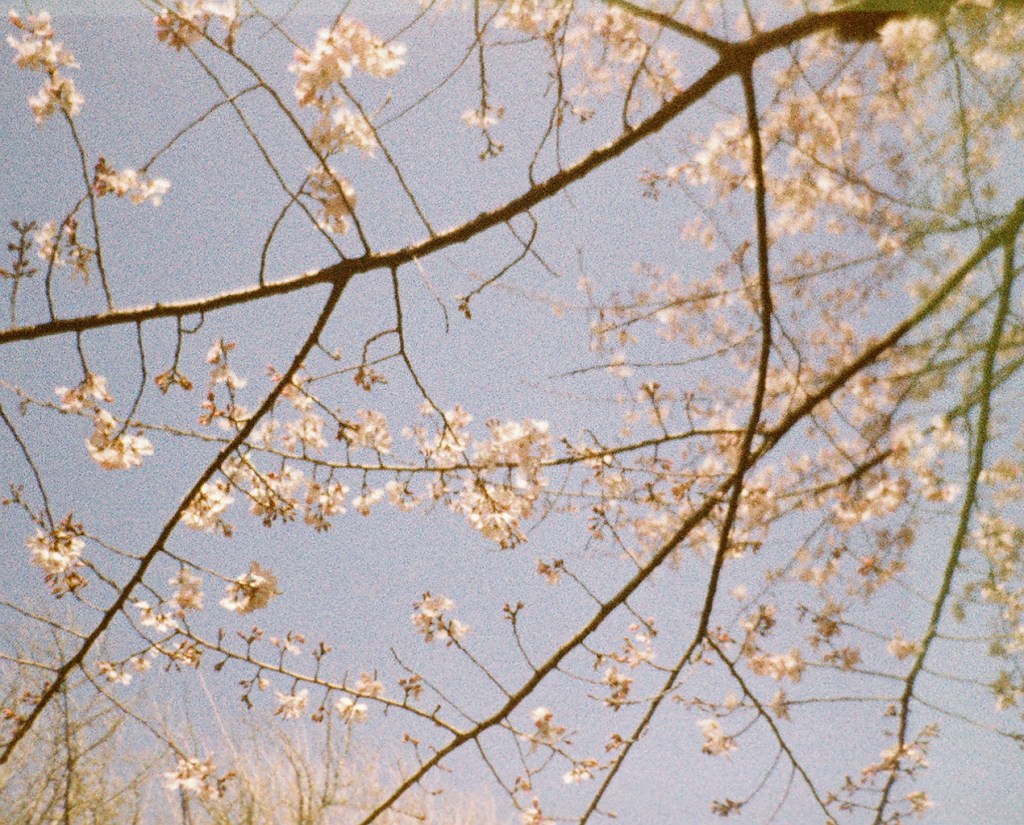
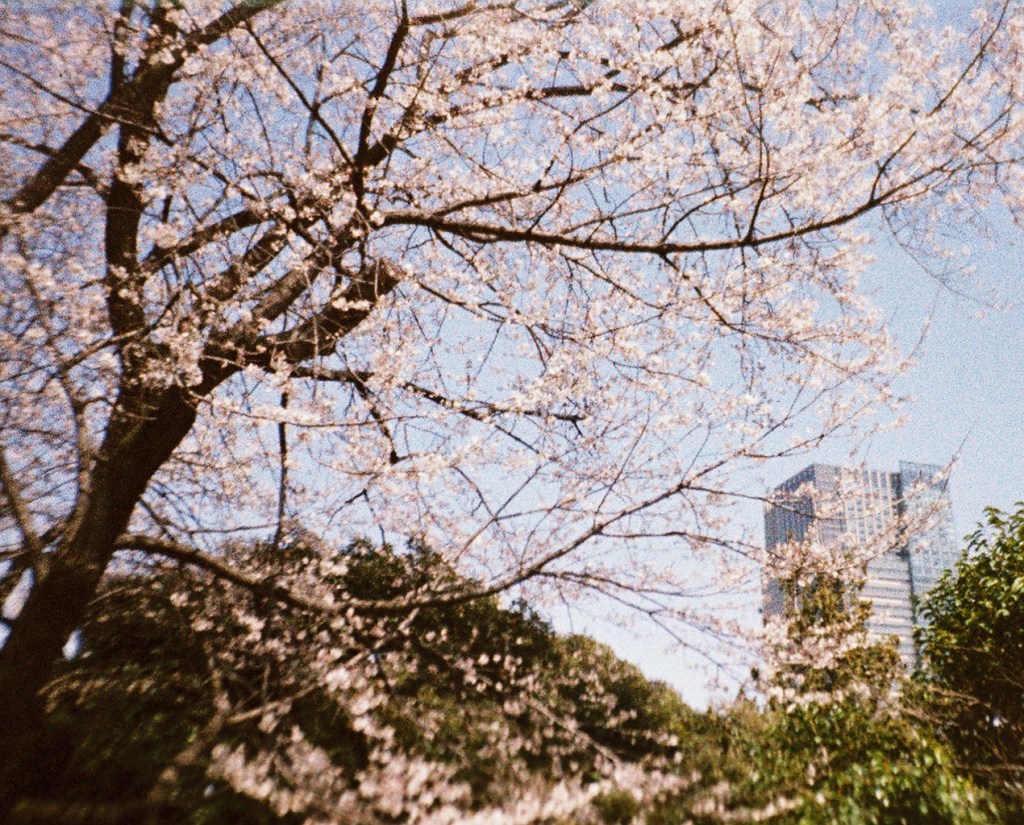
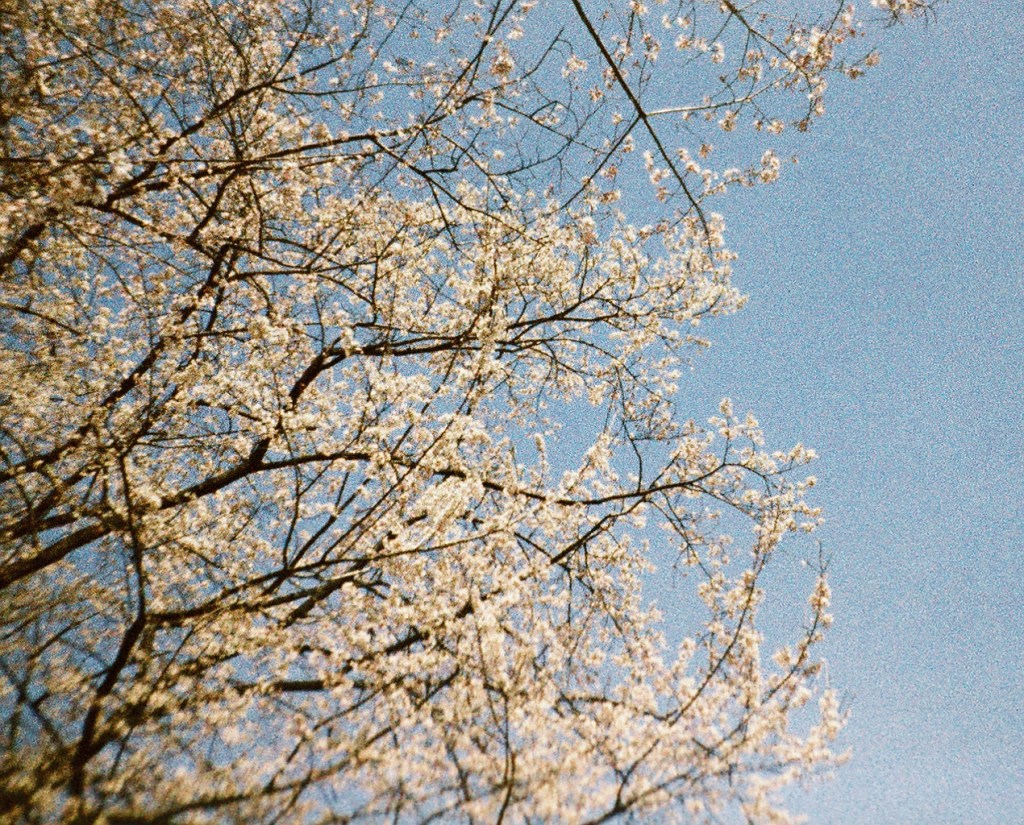
The sun is at its zenith and too hot. While Gio is busy taking — without exaggeration — hundreds of photos and videos and stories, I walk along the narrow pathways under my konbini umbrella, weaving around clusters of gravestones. There are more sakuras going in. I feel ridiculous because the more I look at the map, the more I read that this is a popular spot for hanami, but I won’t let that completely take away the gratifying feeling of a fortuitous encounter. I have with me an experimental 110 film camera that I bought on a whim and which even on the best days wouldn’t do anything justice. My sakuras come out grainy and noisy and odd at the edges; one is double-exposed with the sky; most are off-level, out of focus. But it’s all maybe very okay.

A night or two later, we’re coming out of the station, cutting through the park. The path is relatively safe — it’s still Tōkyō, after all, but still: it’s a lonely park at night, dark save for staggered streetlamps. It’s not exactly a welcome thought, but it is a shortcut. Why is it that shortcuts always offer some feeling of foreboding?
We haven’t gone far yet when we get distracted by a faint glow of lights, up over a staircase in the middle of the trees. The incline hides the light source from our view. In our curiosity we abandon our hotel route and follow the lights, exactly how children get lost in the forest. We climb the stairs and suddenly walk into a nighttime hanami, spread out across an open field of grass surrounded by sakura trees, illuminated as if on centerstage. An entire lawn filled with groups of people, sitting on tarps and drinking saké, laughing. Japanese being loose and loud, after work hours, without shoes. All of them are looking up, smiling, regaling in the ephemeral beauty of sakura blossoms. They take pictures, pass around snacks from the konbini, pour each other drinks, cheeks splotched red. Meanwhile flower petals flurry down from above, like snow, at the slightest breeze.
I experience several different emotions in conflict with each other, in succession: surprise, awe, the want to join in, then a specific kind of loneliness for not being able to. Melancholy in being in the middle of something grand and beautiful while also staying relatively detached from it.
 TINY WORRIES