On this day ten years ago, I boarded a plane from Santa Barbara with a one-way ticket to all the damp and evergreens of the north. I had with me one tacky suitcase, a kind of khaki-beige. Inside its soft shell were clothes and necessities and no books, and I think about how that felt similar to a cartoon, a bundle of possessions tied at the end of a stick when someone runs away from home.
I landed in Seattle under a soft misty rain that renders the air moist, the skies overhead a heavy, cement-block gray. The taxi dropped me off at an address I’d found off of Craigslist at the last minute. That sounds like the beginning of a true crime episode but I’d been fortunate in my naïveté. I had no job, no prospects, no real working experience to speak of. No savings. And yet I was there, in a rented bedroom that had a sticky closet and threadbare carpeting in dark cerulean blue. As soon as I unpacked my meager belongings I plopped onto the air mattress — back when I was still young enough to use air mattresses and my back wouldn’t bitch about it — with my head full and buzzing with, Did I really just do this?
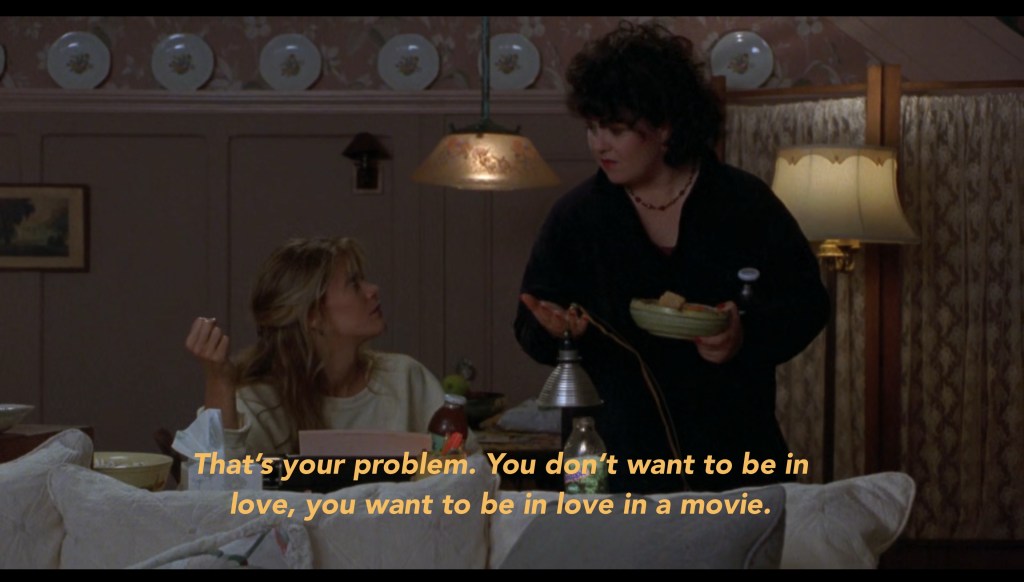
Contrary to what might be reasonable to presume, my move wasn’t actually inspired by Sleepless in Seattle (though the film did give me a delusional idea that it’d be a grand thing to live in a houseboat; now I’m older and can just imagine the upkeep). We first visited Seattle at the tail end of 2010 to welcome the new year somewhere with an actual winter, so it was a Russian roulette of a family holiday destination. I fell hard and fast for this city. The cold winter was lovely — freezing, but not enough that it snowed — and the downtown was compact, everything within walking distance. The people were friendly, there’s a Chinatown, the air was crisp as we panted up Queen Anne Hill. And when “City” by Billie The Vision & The Dancers played it was like meant to be! I fell in love like in a movie, with my very own soundtrack.
The honeymoon fling is long over, replaced since by an ingrained, familiar fondness. It’s not even the same city I had moved into anymore. Eras have ended here, things lost, buildings torn down. Is has become was. Time appears to me a sinking ship, slowly consumed by a black hole made worse by my poor memory and a stubborn coping mechanism of not paying attention to the world at large. In honor of my decennial, I will try to immortalize them here, in part a eulogy (for those lost) and part an ode (for those that remain).
Like that restaurant in Ballard1, where I had dinner and a piña colada with a friend and her husband. I’d been hired to take photos of their wedding in Yosemite some years before, after which she moved with him to Seattle. It was a sort of welcome dinner soon after I moved, and they gave me insiders’ information on where to do groceries and which bus lines to take and where to eat, the best donuts, how to sign up for an ORCA card. But save for a few more meetups later we haven’t seen each other since, and I’d long forgotten all about that restaurant, associating it only with why I don’t like piña coladas, until its quiet exit from my memory. It took some moderately serious Googling before I finally was able to find out the name and even what kind of restaurant it was (Puerto Rican).
At a dingy, low-ceilinged izakaya2 on the second floor of a derelict shopping complex in International District, I got addicted to buta kimchi. The tables were borderline grimy, the lights too yellow and dim, but the food was comfortingly good and at one point the waitress asked if I wanted “the usual.” Countless nights spent here, and it’s really difficult to stop going to a place where one has become a regular. They eventually merged with another izakaya next door, now occupying the whole second floor. The menu stayed, and as far as I know so did most of the staff, but it’s me who changed by moving too far and learning how to make my own buta kimchi at home.
Along Denny Way was an empty lot I passed by every day. They didn’t seem to know what to do with the space, stuck in a real estate limbo, and so they put up these art pieces that they changed every now and then. Somehow, after a while and we’ve moved out of Denny, they figured it out amongst themselves and to my bafflement erected a modern sculpture of a building, a mystery in itself (apparently a Seattle City Light substation). I do miss the changing art pieces, the surprise and the time I took to look at each new installation. Denny Park nearby has been revamped and cleaned up, offering a semblance of an aesthetic, well-lit safety should anyone fancy themselves a nighttime stroll in the park. The retirement home across from it, however, dwindles like a dying flame in its resistance to change.
My first bowl of ramen was in Lake City3, a gateway bowl of the sort that would make the authentic Japanese ramen clutch its pearls. Their offerings were more of a hybrid with Hawaiian, the broths decadent and the noodles curly and thick. The one I usually ordered was this monstrosity of a miso-based bowl topped with an entire tonkatsu and a side of their popular fried rice. My blood pressure spikes just thinking about it, so sinful and outrageous it was. Like the restaurant in Ballard, a fire destroyed the business and they never reopened.
On the topic of bookstores, there’s more persistence. There’s that one with cats; or one from where I got a single-bound collection of The Lord of the Rings when I was still unemployed but forking out $10 for it because I needed the kind of distraction only thick fantasy fiction can provide; or a cramped, two-story one if you brave the market crowds; or my perpetual favorite, bright and airy and next to a café whimsically called Oddfellows, and if I walk around the corner I can grab a cone from Molly Moon’s.
Down Union Street on First Hill was where I got Seattle hot dogs from4, crowned with a helping of cream cheese and scallions. I’d brought visitors there when they came to see me: my dad, my sister, Gio. This shop, too, has since closed down — though hot dog stands still sell Seattle dogs, of course, and for cheaper; if I come out on any ballgame night, they’re all over the streets — but when I think about that time, beginning and alone in the city, I think of that narrow little place that sells weird hot dogs.
Across the street from my first apartment was a car wash place with the iconic pink elephant, twirling around in neon lights all day. That’s gone, too. But the Walgreens across from it, where I bought my first hairdryer, is still there; so is the all-day café where Gio and I once walked to for breakfast at the break of dawn after staying up all night. But the viaduct is long gone, the waterfront looks different, and there are more vagrants in the streets.
I’ve moved across the lake, changed jobs. A house further south. I consider driving to Seattle an errand, something done for a very good reason (or very good food, which is more often than not). I have to negotiate with my time and the traffic. But it’s like visiting a relative I’m fond of who lives at an inconvenient location: I dread the journey but do it anyway, and never sorry when I do. When I’m heading southbound on the I-5 and entering the downtown proper after the bridge, I still lean right for the beautiful view. I still play “City” as the lake opens up, the Needle standing in the distance, comparatively tiny yet perfectly unobstructed. Its ever-changing neighbors of high-rises stand far away, respectful, almost cowering in the corner. I like to think that it’s illegal (or at least preposterous) for any building to obstruct the view of the Space Needle like how there’s a law to protect the views of St Paul’s Cathedral in London.
I used to do this drive a lot, coming from the bridge on my way to work, day or night. Whenever we’re showing guests around in the city, Gio would do this drive if he can and we’ll always get the awed exclamations from the backseat, the scrambling for phones and trying to capture it. Despite the graffiti and the astronomical housing market, the edging out of all the good little places, I love showing off this city. The deep culture in things like coffee and food diversity and gender inclusion and all this Kodak Gold green and independent everything. Sometimes it will snow and the city halts, but mostly we stay in the happy middle of a Goldilocks’ bed: no blizzards or raging typhoons; hardly any of the East Coast snowstorms or unforgiving Californian heatwaves. Things are no longer what they used to be ten years ago — that’s such an old person thing to say and lament about — but some of the small things are still here, like this drive and this view and this song.
 TINY WORRIES